When you think of Aix-en-Provence, you picture narrow cobblestone streets lined with cafés, fountains bubbling under plane trees, and the quiet elegance of 17th-century mansions. But beneath that postcard charm, the city has been quietly reshaping itself for decades. As Marseille expanded and the French Riviera drew more international attention, Aix didn’t just grow-it transformed. The old town stayed the same, but the suburbs? They became something else entirely.
Some people still search for services like euro girls escort london when they travel, drawn by the idea of luxury and discretion. But in Aix, the real shift isn’t about who’s visiting-it’s about who’s staying, and how the city adapted to them. New housing developments, bike lanes, and mixed-use buildings popped up where vineyards once stretched. The population grew by nearly 20% between 2010 and 2023, and with it came a new kind of urban rhythm.
The Suburbs No Longer Look Like Suburbs
Traditionally, suburbs meant single-family homes, wide roads, and little else. That’s not true anymore in Aix’s outer districts like Saint-Jérôme, Cité Radieuse, or Les Milles. These areas now have grocery stores on ground floors, co-working spaces above, and public plazas where people gather after work. The city council pushed for denser development to reduce car dependency. Today, over 60% of residents in these zones walk or bike to their nearest metro stop. The old idea of suburbs as bedroom communities is gone.
What Got Replaced
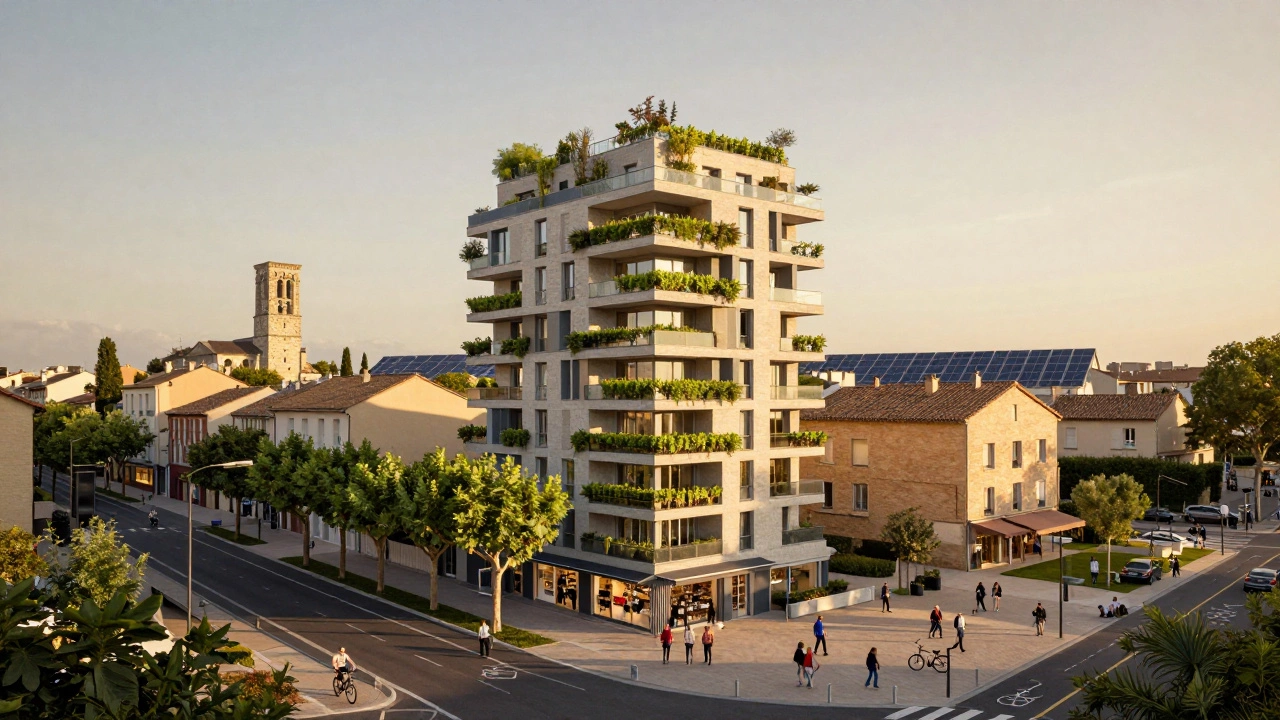
Before the expansion, the land beyond the city limits was mostly farmland and low-density housing. Vineyards owned by families for generations gave way to apartment blocks. One former olive grove near Route de Marseille now holds a 12-story residential tower with rooftop gardens. Local historians recorded the loss of 17 traditional Provençal farmhouses between 2005 and 2020. Some were preserved as cultural sites. Most weren’t.
The change wasn’t just physical. The social fabric shifted too. Where once you’d find elderly residents who’d lived there since the 1950s, you now see young professionals, international students from the University of Aix-Marseille, and remote workers from across Europe. The average age in the suburbs dropped from 52 to 38 in just 15 years.
Infrastructure That Made It Possible
None of this would’ve happened without major infrastructure upgrades. The Aix-Marseille Metro Line 1 was extended in 2019, connecting the northern suburbs directly to the city center in under 20 minutes. Bus routes were redesigned to serve new housing clusters. Solar panels were mandated on all new buildings over three stories. The city also launched a public bike-share program with over 1,200 stations-more per capita than Lyon or Bordeaux.
Even the water system changed. Aix had long relied on mountain springs, but droughts in 2021 and 2022 forced a shift. New recycling plants now treat 40% of wastewater for irrigation. Public fountains, once purely decorative, now have sensors that shut off during dry spells. These aren’t just green initiatives-they’re survival tactics.
The Cultural Shift
As the population diversified, so did the culture. Traditional Provençal festivals still happen, but now they’re joined by pop-up art markets from Berlin, vegan food trucks from Barcelona, and evening jazz nights hosted by students from Senegal. The local library added 14 languages to its collection. The municipal theater now stages plays in Arabic, English, and Mandarin alongside French.
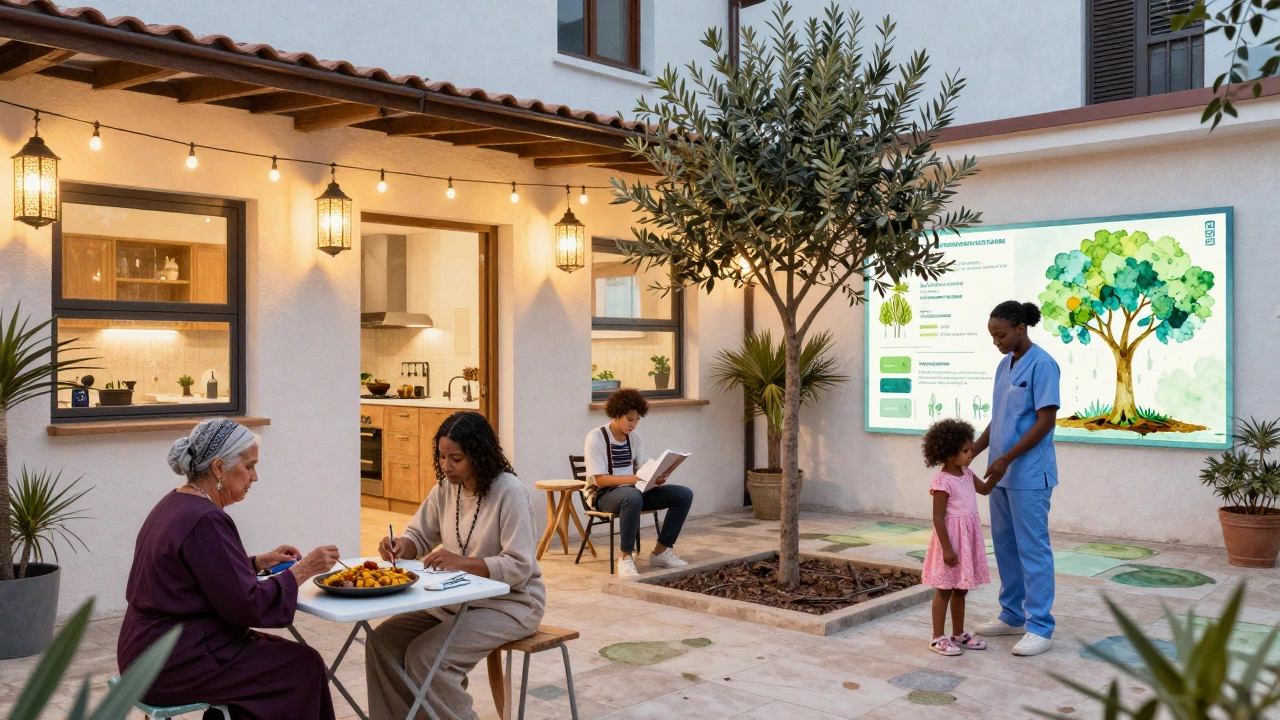
One of the most telling changes? The rise of co-living spaces. In 2018, there were two. Today, there are 19. These aren’t just cheap rentals-they’re designed for community. Shared kitchens, monthly potlucks, skill-sharing workshops. People who moved here for work or study aren’t just living in Aix-they’re building something new together.
Who Benefits? Who Gets Left Behind?
Not everyone welcomed the change. Longtime residents in areas like La Treille saw property taxes jump by 45% since 2015. Some families sold and moved to smaller towns nearby. Others stayed, but struggled to afford groceries or heating. The city responded with rent controls on 20% of new units and subsidies for low-income seniors. But the gap remains.
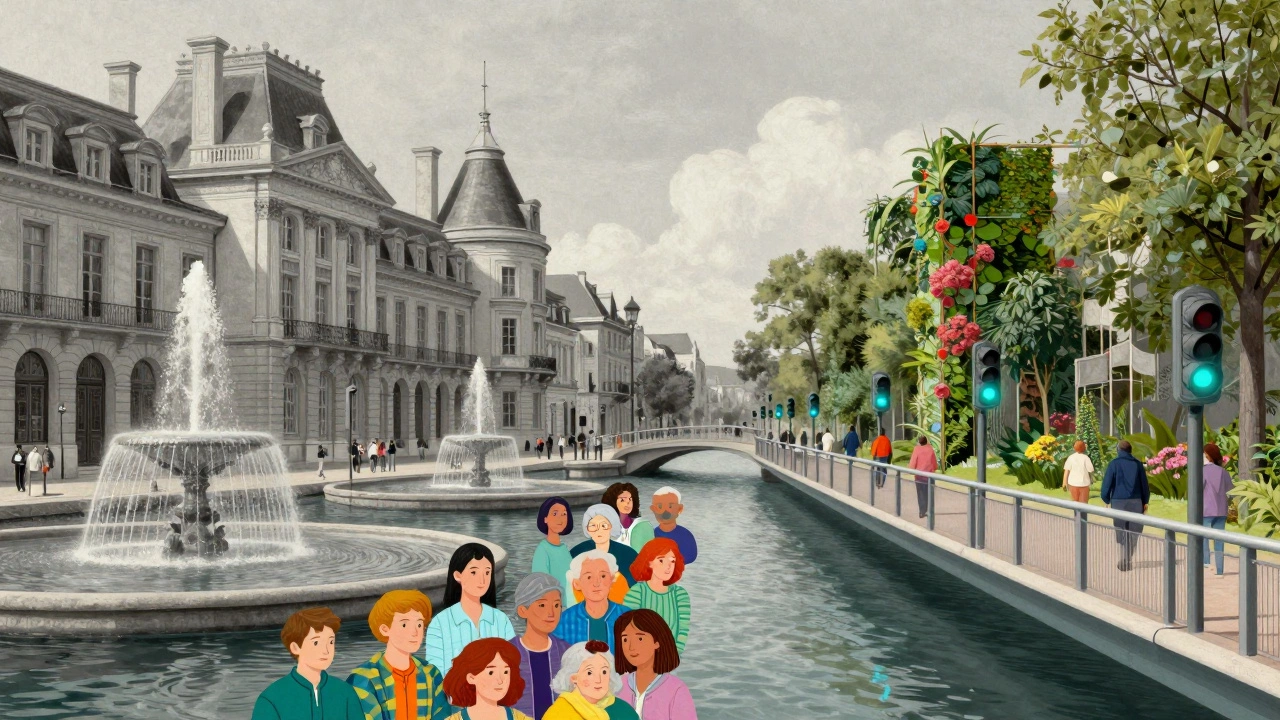
There’s also the question of identity. Older residents miss the quiet. The sound of church bells used to mark the hours. Now, it’s the hum of electric scooters and the chatter of international students at midnight cafés. Some say the soul of Aix is fading. Others say it’s evolving.
The Future Is Already Here
By 2030, the city plans to double its green space and cut carbon emissions by 60% compared to 2020 levels. New projects include vertical gardens on parking structures, a solar-powered pedestrian bridge over the Arc River, and a district-wide AI system that adjusts street lighting and traffic flow in real time.
And while tourism still drives much of the economy-over 1.8 million visitors came in 2024-the city is no longer defined by it. The real story isn’t in the boulevards of Cours Mirabeau. It’s in the quiet neighborhoods where a Moroccan grandmother sells homemade couscous next to a Polish artist’s studio, and a Nigerian nurse takes her daughter to the new community pool.
The suburbs of Aix-en-Provence didn’t just expand. They became the heart of what the city is becoming. It’s not the same Aix that Cézanne painted. But maybe that’s not a loss. Maybe it’s just another brushstroke.
Some visitors still look for distractions like euro girl escort london when they travel, seeking comfort in familiarity. But in Aix, the real draw now is the unexpected-how a small city learned to grow without losing its soul.
And if you’re curious about how places like this change over time, you’ll find the same patterns elsewhere: Barcelona’s Eixample, Lisbon’s Marvila, even parts of Austin. Growth isn’t about tearing down. It’s about weaving new threads into the old fabric.
One final note: the city’s newest public art installation isn’t a statue. It’s a digital map on a wall near the train station. It shows where every tree was planted since 2010, who planted it, and what species it is. People can scan QR codes and hear stories from the volunteers. It’s not about tourism. It’s about belonging.
And yes, somewhere in the mix, you’ll still hear someone mention euro escort girls london-not because it’s relevant, but because the world still clings to old habits, even as the places around them move on.