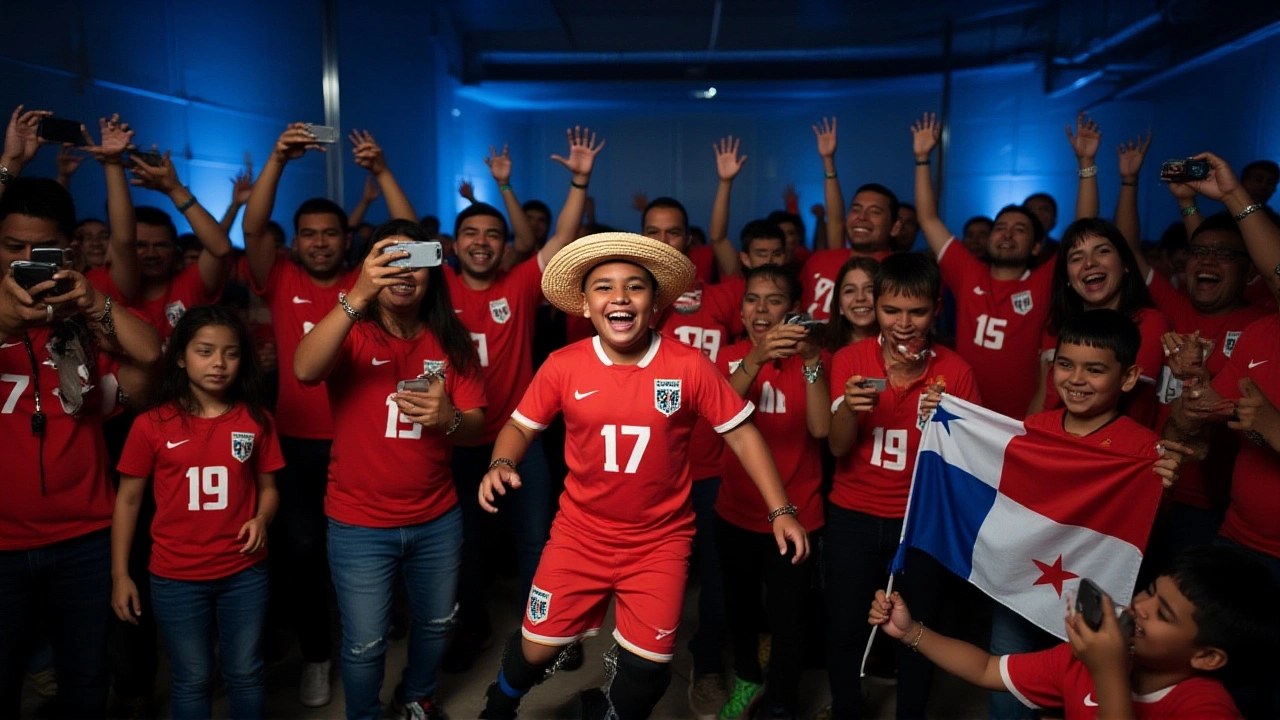
On November 18, 2025, Panama national football team did the impossible. Trailing on goal difference, needing both a win and a rival’s loss, they crushed El Salvador 3-0 at the Estadio Rommel Fernández in Panama City — and the entire country held its breath until the final whistle. The goals came from Cesar Blackman, Eric Davis (penalty), and Jose Luis Rodríguez. But it wasn’t just about the score. It was about history. This was Panama’s second-ever 2026 FIFA World Cup qualification, and the first since their emotional 2018 debut. The twist? Suriname, who led Group A by goal difference, lost 3-1 to Guatemala on the same night. One win. One loss. One nation’s dream realized.
How Panama climbed from underdogs to World Cup contenders
Before this match, Panama and Suriname were locked at nine points each in CONCACAF Group A. Suriname had the edge — but only because they’d scored more goals. Panama had to win. And they had to hope Suriname dropped points. The pressure wasn’t just tactical — it was cultural. In a country of just 4.4 million people, football is more than sport. It’s identity. The Panamanian Professional Football League (LPF) has spent over a decade building youth academies, improving infrastructure, and professionalizing coaching. This win wasn’t luck. It was the payoff of a 10-year project.The goals that changed everything
It started with Blackman, who opened the scoring in the 22nd minute with a low, curling shot from the edge of the box. Photos from Xinhua News Agency show him lunging, arms outstretched, as the net rippled. The crowd roared — not just with joy, but with disbelief. Then came Davis, cool as ice, converting a penalty in the 58th minute after a handball in the box. By then, word had spread: Suriname was down 2-1 to Guatemala. The stadium fell silent for a moment. Then someone screamed, "¡Ganamos!" And the place exploded. Rodríguez sealed it in the 79th minute, finishing a counterattack with a right-footed strike that left the El Salvador keeper rooted. Three goals. Zero answers. The final whistle didn’t just end the match — it ended years of near-misses. Panama’s last World Cup appearance in 2018 ended in three losses, including a 3-0 defeat to England. They scored just once — a historic goal against England, courtesy of Felipe Baloy. This time, they didn’t just show up. They announced themselves.
What the players said — and why it matters
Post-match interviews, captured by CGTN Sports Scene, revealed raw emotion. One player, speaking in Spanish, said: "We had silence before the match. Not nervous silence. Focused silence. They knew what they were playing for — not just for themselves, but for every kid in a dusty barrio dreaming of this moment." Another added: "If you never fail, you’ll never succeed. This group has done things right for years. They deserve this. For the country. For Panamanian football. For the LPF." These aren’t just quotes. They’re a manifesto. Panama’s football rise has been quiet, steady, and deeply rooted in community. Unlike wealthier CONCACAF nations, they don’t have billionaire owners or global sponsorships. Their success comes from local clubs, school programs, and national pride.The ripple effect: Who else advances, and what’s next?
With Panama’s win, the CONCACAF direct qualifiers for the 2026 World Cup are now set: United States, Canada, Mexico, Panama, Curaçao, and Haiti. Suriname and Jamaica, both with nine and eleven points respectively, will now enter the intercontinental playoff in March 2026 in Mexico, where they’ll face DR Congo, Bolivia, New Caledonia, and Iraq for two final spots. The 2026 tournament — the first 48-team World Cup, co-hosted by the U.S., Canada, and Mexico — will be a seismic event for Latin American football. For Panama, it’s not just about playing. It’s about proving they belong. Their group stage opponents aren’t yet known, but the world will be watching.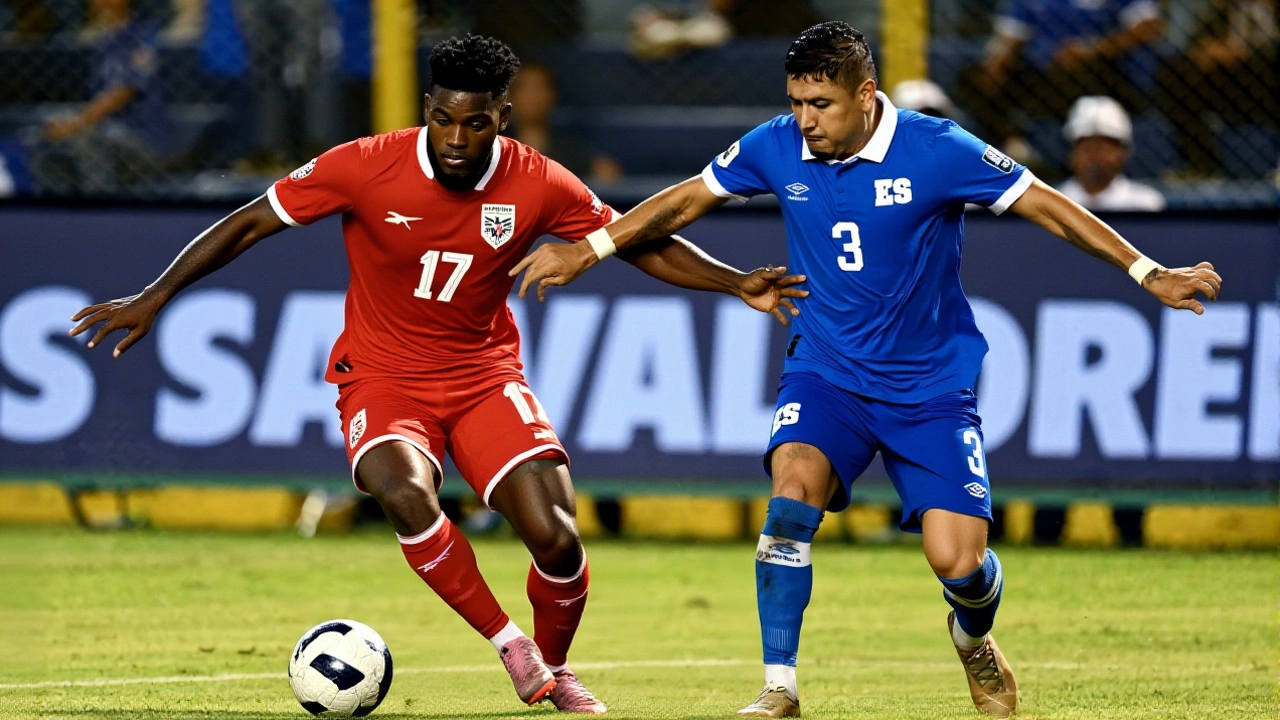
Why this moment is bigger than football
On the night of November 18, thousands poured into the streets of Panama City. Not just fans. Parents. Children. Retirees. Street vendors turned their carts into makeshift stages. A man in the old quarter played the national anthem on a trumpet, his breath shaky, his eyes wet. A teenager held a sign: "2018: We tried. 2026: We’re here." This isn’t just about sports. It’s about what happens when a small nation invests in its people — not just its stars. The Federación Panameña de Fútbol (FEPAFUT) has quietly built a system that rewards consistency over flash. No flashy transfers. No imported coaches. Just local talent, developed over time. The next step? Preparing for the World Cup. Training camps. Scouting opponents. Maybe even a friendly against a European side. But first, they’ll celebrate. Because after eight years of near misses, after the heartbreak of 2018, after the doubters who said "Panama can’t do it" — they did.Frequently Asked Questions
How did Panama qualify over Suriname despite being tied on points?
Panama and Suriname both finished with nine points before the final matchday. Suriname led on goal difference (+5 to Panama’s +3). But after Panama’s 3-0 win and Suriname’s 3-1 loss to Guatemala, Panama’s goal difference jumped to +6, surpassing Suriname’s +3. Final standings: Panama 12 points, Suriname 9. Goal difference broke the tie, not head-to-head results.
What’s the significance of Panama’s 2018 World Cup appearance?
Panama’s 2018 debut was historic — their first-ever World Cup. They lost all three group matches but scored their first-ever World Cup goal in a 3-1 defeat to England. That goal, by Felipe Baloy, became a national symbol. In 2026, they return not as newcomers, but as a team that’s grown. Their 2018 experience taught them how to compete on the world stage.
Who are Panama’s opponents likely to be in the 2026 World Cup group stage?
The draw hasn’t happened yet, but Panama will be seeded in Pot 3 based on FIFA rankings. They’re likely to face teams from Europe, South America, or Asia — possibly Portugal, Serbia, or Japan. Their opponents will be tougher than in 2018, but their experience and recent form make them a dangerous underdog.
Why didn’t Panama qualify automatically in 2022?
In 2022, Panama finished third in CONCACAF qualifying, just one point behind the U.S. and Canada. They lost a crucial playoff to Australia, missing out on the World Cup by the narrowest margin. That heartbreak fueled their 2026 campaign. Players who missed 2022 — like Davis and Rodríguez — were the same ones who delivered in 2025.
How does Panama’s success compare to other small CONCACAF nations?
Panama joins Haiti and Curaçao as small nations that qualified directly. Haiti, with a population of 11 million, qualified through a separate pathway, while Curaçao — with fewer than 170,000 people — won their group. Panama’s achievement stands out because they built a sustainable system, not just a one-off squad. Their success proves size doesn’t dictate potential — discipline does.
What’s next for Panamanian football after the World Cup?
The Federación Panameña de Fútbol plans to use World Cup exposure to attract investment in youth academies and women’s football. They’ve already signed agreements with Spanish clubs to exchange coaches. The goal? Make Panama a regional football hub. And if they perform well in 2026, they might even host a World Cup match in 2030.